

- This event has passed.
Bokashi Workshop – Part 1 – Bokashi Gardening
June 21, 2025 @ 11:00 am - 1:00 pm
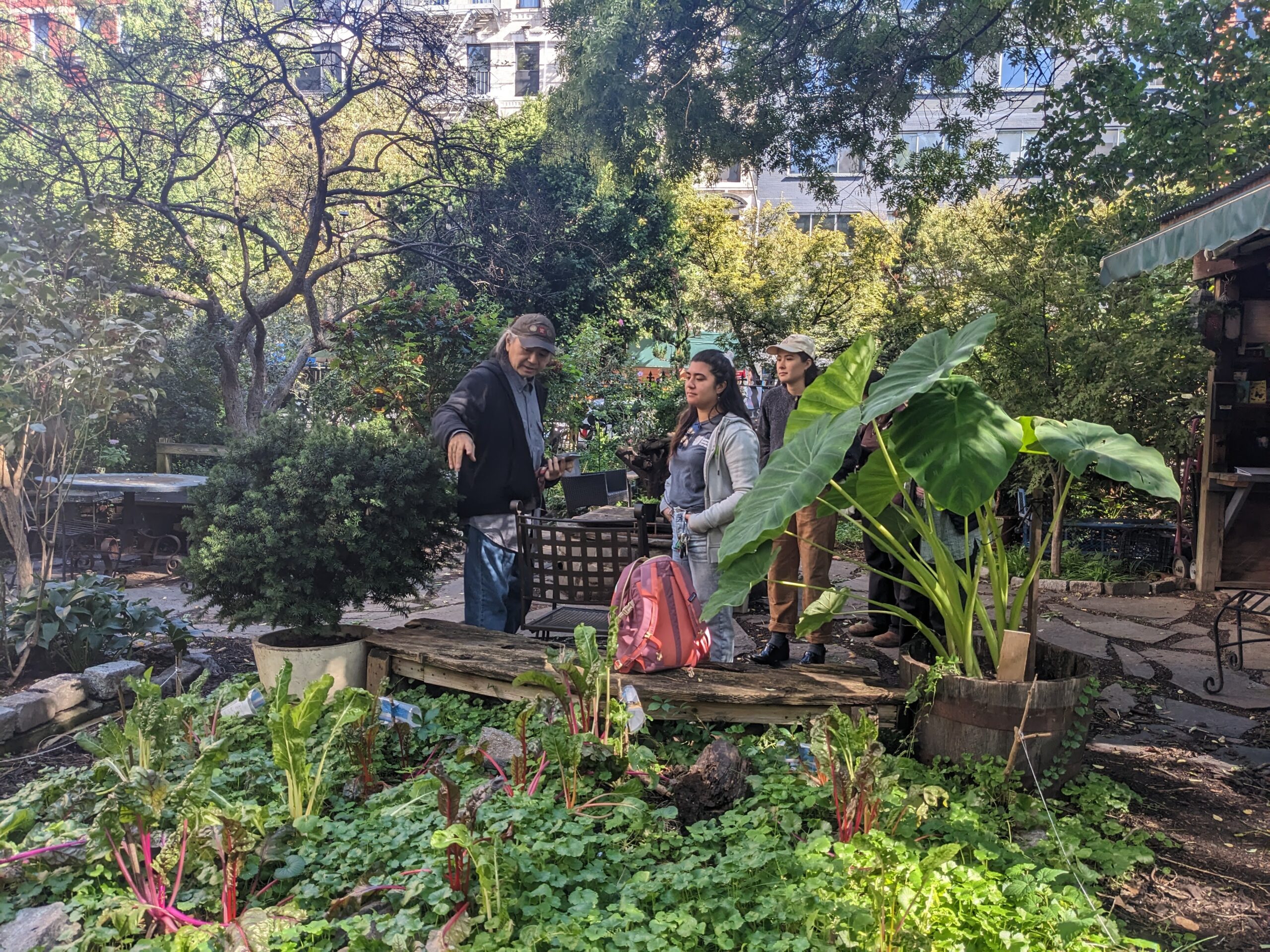
An intro to the basics of bokashi gardening and soil care (towards creating a living soil—see postscript below).
Learn the two main ways to make the basic bokashi ferments:
a. the bokashi sprinkle with wheat bran (aka bokashi bran)
b. the bokashi spray (a liquid bokashi ferment, aka Activated EM).
We will also make EM•5 foliar spray (another type of liquid bokashi ferment with garlic and hot peppers) which is used to spray on plants and trees, as well as treat the soil.
These bokashi ferments will take at least 2 weeks to ferment before they’re ready to use.
What is living soil? Soil that’s full of life (microbes, worms, insects) and is self-sustaining and self-balancing.
Self-sustaining: as in a forest, no one feeds a forest, microbes break down organic matter at all stages (from freshly dead to fully decomposed plant matter and all other organisms) providing a full range of nutrients.
Self-balancing: when microbial life is dense in the soil in population and diversity, they keep pathogens (disease-causing microbes, but which have their ecological role) in check and can perhaps function beneficially (for example, in the human gut, E. coli, a pathogen, naturally exists, and when our body, their environment, is healthy, i.e., with a healthy gut microbiome, they actually produce vitamin K and anti-pathogens against other pathogens; when we’re sick, esp. from food poisoning, their population explodes and change function producing toxins).
Soil can be made into living soil by various methods. The bokashi method is one way to facilitate building and maintaining living soil (or close to living soil).
At its very basic, bokashi is about applying microbes and organic matter.
The bokashi method, however, involves using microbes to ferment organic matter.
During fermentation, all kinds of microbes multiply and produce metabolites.
Metabolites are both 1) necessary for the microbes metabolism and 2) byproducts of the microbes metabolism.
One group of microbes may use one set of metabolites to produce other kinds of metabolites which are then used by other microbes.
Metabolites includes nutrients (micronutrients and macronutrients) and other beneficial substances.
On average, a microbe can produce 50 unique metabolites and anywhere from 3,700 to 16,000 metabolites in total depending on species.
Metabolites, when in abundance, can give foods vibrant colors, enhanced flavors and aromas.